%20SVG.svg)
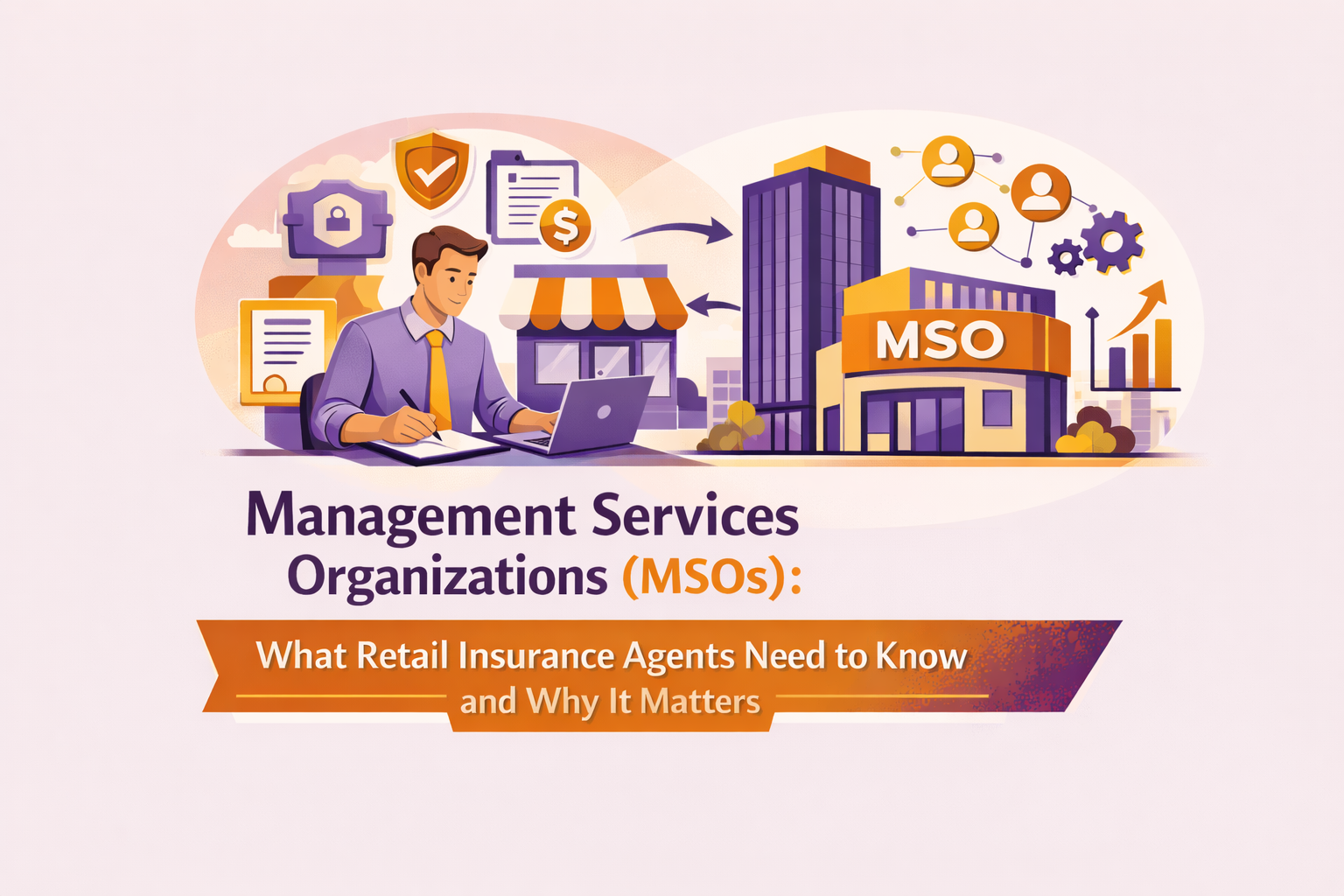
Management Services Organizations (MSOs) have become foundational to the operation and expansion of medical practices across the United States. A 2023 market analysis by Grand View Research valued the U.S. MSO industry at nearly $47 billion, with projected double-digit annual growth driven by private investment and consolidation[1]. MSOs provide non-clinical infrastructure that allows physicians and healthcare groups to focus on patient care amid increasing regulatory and operational complexity[2].
This article is written to help retail insurance agents understand how Management Services Organizations are structured, why they are expanding across healthcare, and how their structure fundamentally changes the way their risk profile must be evaluated and managed.
PART 1: Understanding the MSO Model and Why It Is Expanding
What Is a Management Services Organization (MSO), and Why It Exists

A Management Services Organization is a business entity that provides administrative, operational, and financial management services to affiliated medical practices[3]. MSOs typically contract with physician-owned professional corporations (PCs) or professional limited liability companies (PLLCs) to perform non-clinical business functions.
The MSO model emerged as a legal solution to state Corporate Practice of Medicine (CPOM) laws, which prohibit unlicensed individuals or general corporations from owning or controlling medical practices[4]. These statutes reserve ownership of clinical practices to licensed physicians and restrict direct investment by hospitals or private equity firms. MSOs provide a compliant structure that allows outside investors and professional managers to participate in healthcare operations while clinical decision-making remains under physician control[5].
In a typical MSO structure, two entities are maintained to separate clinical care from business operations:
-
-
Professional Corporation (PC): Owned exclusively by physicians, the PC holds clinical assets such as patient records, licenses, and provider agreements. Physicians practice medicine through this entity and retain authority over all clinical decisions.
-
MSO Entity: Often owned by investors or a parent organization, the MSO holds non-clinical assets including office leases, equipment, and IT systems. It provides management services under a long-term Management Services Agreement (MSA) and does not practice medicine.
-
In practice, the MSO manages the business of medicine while physicians retain control of the practice of medicine, enabling growth without sacrificing clinical autonomy.
What MSOs Actually Do
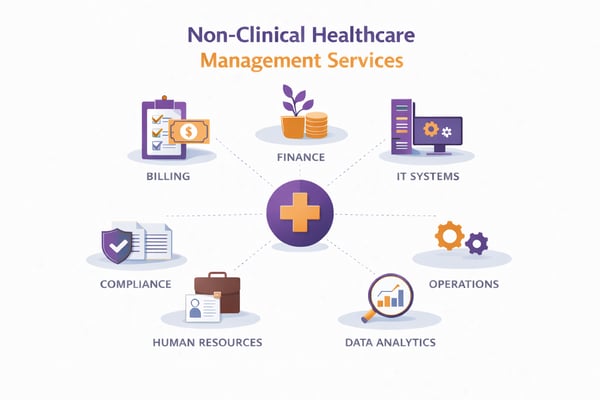
MSOs provide non-clinical services that many physician practices lack the scale or expertise to manage independently[5]. These services typically include:
-
Financial and Administrative: Revenue cycle management, accounting, payroll and benefits administration, human resources support, and facilities management[5].
-
Technology and Data: Electronic Health Record and practice management systems, IT infrastructure and cybersecurity, and data analytics supporting quality reporting and population health initiatives[5].
-
Compliance and Strategic: Regulatory compliance oversight, payer contracting and credentialing, marketing initiatives, and consulting services designed to improve efficiency or support growth[5].
By centralizing these functions, MSOs enable practices to achieve operational efficiency and economies of scale that are difficult to replicate independently[6].
Why MSOs Are Proliferating and What That Signals for Insurance Risk

The MSO model has expanded rapidly due to financial, regulatory, and market forces across healthcare. Key drivers include:
-
Outsider Investment: MSOs allow non-physician investors, including private equity firms, to participate in healthcare practices without violating ownership restrictions[7]. Private equity investment in healthcare increased nearly fourfold from 2015 to 2022, with many transactions structured through MSOs[8].
-
Shift to Value-Based Care (VBC): Value-based reimbursement models have increased demand for infrastructure, analytics, and care coordination. MSOs provide centralized platforms that enable participation in these programs[9].
-
Access to Enterprise Level Technologies: By consolidating back-office functions, MSOs give smaller practices access to enterprise-level capabilities at shared cost[10][11].
-
Reducing Physician Burdens: Administrative workload and compliance demands contribute to physician burnout. MSOs alleviate this burden by assuming responsibility for practice management functions[11] [12].
Together, these forces have accelerated MSO adoption nationwide and created a growing category of healthcare organizations with distinct operational and risk profiles.
PART 2: Why the MSO Model Creates Unique Insurance Risk
Professional Liability Insurance Challenges for MSOs
Because the MSO structure separates clinical risk from business risk, securing appropriate insurance coverage becomes more complex. Since MSOs are deeply embedded in healthcare operations but do not provide medical treatment, many of their activities fall outside the scope of standard medical malpractice policies.
Key Coverages and Risk Considerations

-
-
Errors & Omissions (E&O) / Managed Care Liability: This is the primary professional liability exposure for MSOs, addressing claims arising from non-clinical services such as billing and coding errors, negligent credentialing, and utilization management decisions[13]. MSO liability more commonly involves financial loss, privacy breaches, or IT failures than direct patient injury[14]. Tailored E&O coverage is essential and may also address regulatory liabilities often excluded from malpractice policies[15] [16].
-
Cyber Liability: MSOs manage large volumes of sensitive data across centralized systems, creating heightened exposure to data breaches and ransomware events. Cyber liability insurance covers breach response costs, system restoration, and regulatory fines associated with HIPAA violations [16].
-
Directors & Officers (D&O) Liability: MSOs require D&O coverage to protect leadership against claims alleging mismanagement, breach of fiduciary duty, or misrepresentation. These policies are often placed alongside managed care E&O coverage as part of a broader management liability program[17].
-
Vicarious Liability for Medical Acts: Although MSOs do not practice medicine, plaintiffs may allege that an MSO exercised undue control over clinical operations. Courts often evaluate MSAs and operational controls when assessing this risk. Some insurers offer endorsements addressing vicarious liability exposure, though these can be difficult and costly to obtain[18].
-
Beyond these core policies, MSOs typically carry general liability, property, and workers’ compensation coverage. Because non-clinical staff are often employed by the MSO while clinical staff remain employed by the PC, insurance packages need to align closely with the MSO-PC structure[19].
How Underwriters Evaluate MSOs and What Retail Agents Should Prepare For

Underwriters evaluate MSOs by reviewing the Management Services Agreement between the MSO and the PC, which defines service scope and operational control[20]. Sharing the MSA with insurers is a widely recommended best practice to reduce coverage ambiguity and disputes[20]. Effective coverage often requires coordinating unique solutions for the MSO and PC entities to ensure seamless protection for both the business and clinical risks.
PART 3: What This Means for Retail Insurance Agents
Key Takeaways for Retail Insurance Agents

MSOs are now central to modern healthcare practice management. As these organizations expand, retail insurance agents must understand how MSO structure, operational responsibility, and insurance coverage intersect.
MSOs Change How Risk Is Allocated
Risk in an MSO structure is intentionally fragmented. Clinical liability resides with the physician-owned professional entity, while administrative and management liability resides with the MSO. When coverage does not mirror this structure, gaps emerge.
For agents, this means:
-
- Medical malpractice insurance alone is never sufficient for an MSO.
- General professional liability policies are often misaligned with MSO exposures.
- Coverage must be evaluated at the entity level, not the enterprise level.
Agents who understand this distinction can immediately add value by identifying where coverage is mismatched to legal responsibility.
The Management Services Agreement Is a Risk Document
The Management Services Agreement is a critical underwriting document for MSOs. The scope of services defined in the MSA shapes professional liability exposure, while control provisions influence vicarious liability risk. Reviewing the MSA during placement allows agents to anticipate underwriting concerns and advocate for appropriate coverage terms.
How We Support Retail Insurance Agents Serving MSO Clients

MSO insurance placement requires healthcare-specific expertise, experience reviewing Management Services Agreements, and access to carriers that understand MSO risks. Healthcare Professional Liability is highly specialized, and MSOs operate across multiple entities and regulatory regimes that are often not fully accounted for by generalist wholesale brokers. When coverage is structured incorrectly, gaps may not become apparent until a claim, regulatory inquiry, or coverage dispute occurs. At that point, those gaps can leave the insured exposed and their insurance agent open to E&O allegations.
By contrast, Ethos works directly with retail insurance agents as a true healthcare professional liability specialist, focused exclusively on complex healthcare risks like these. Our expertise not only grants us carrier access but ensures that your clients are properly covered. With proper coverage in place, you in turn are shielded from potential claims.
Ethos partners with retail insurance agents to:
- Analyze MSO structures and affiliated entities
- Review Management Services Agreements from a risk and coverage perspective
- Identify gaps between legal responsibility and existing insurance
- Design coordinated insurance programs across E&O, cyber, D&O, and related lines
- Support placement with carriers experienced in MSO underwriting
Our role is to help you identify these risks early, align coverage correctly, and place programs that are defensible if decisions are later examined.
Ready to Place Coverage for an MSO Client?
If you are working with a client that operates as, or alongside, a Management Services Organization, Ethos can help. Whether you are evaluating an existing program or placing coverage for a new MSO, we partner with retail insurance agents to reduce uncertainty, anticipate underwriting concerns, and support placements that stand up when they matter most.
Contact us to discuss your MSO clients and explore coverage options designed specifically for MSO risks.
This market is active, and the customers are underserved. Don’t wait. Click to Call, Email, or Schedule a Meeting now!
Sources
[1][9] U.S. Management Service Organization Market | Industry Report, 2030
https://www.grandviewresearch.com/industry-analysis/us-management-service-organization-market-report
[2][7] The Corporate Backdoor to Medicine: How MSOs Are Reshaping Physician Practices | Milbank Memorial Fund
[8][14][16] Filling the Insurance Gap for Healthcare MSOs | Admiral Blog
https://www.admiralins.com/blog/filling-insurance-gap-healthcare-mso/
[3][5][10][12] Understanding management services organizations (MSOs): Benefits, compliance risks, and best practices
[4][6][11] Management Services Organizations (MSOs)
https://www.frierlevitt.com/who-we-serve/healthcare/management-services-organizations/
[13][17][18] Managed care E&O and D&O liability - Liberty Mutual Business Insurance
[15][19] Management Services Organization (MSO) - One Sheet
https://alliant.com/media/ek2cyhcm/email-6-onesheet-mso-final.pdf
[20] Insurance Considerations for Private Equity Healthcare Investors - Symphony Risk
